
Lover’s Beach Elba
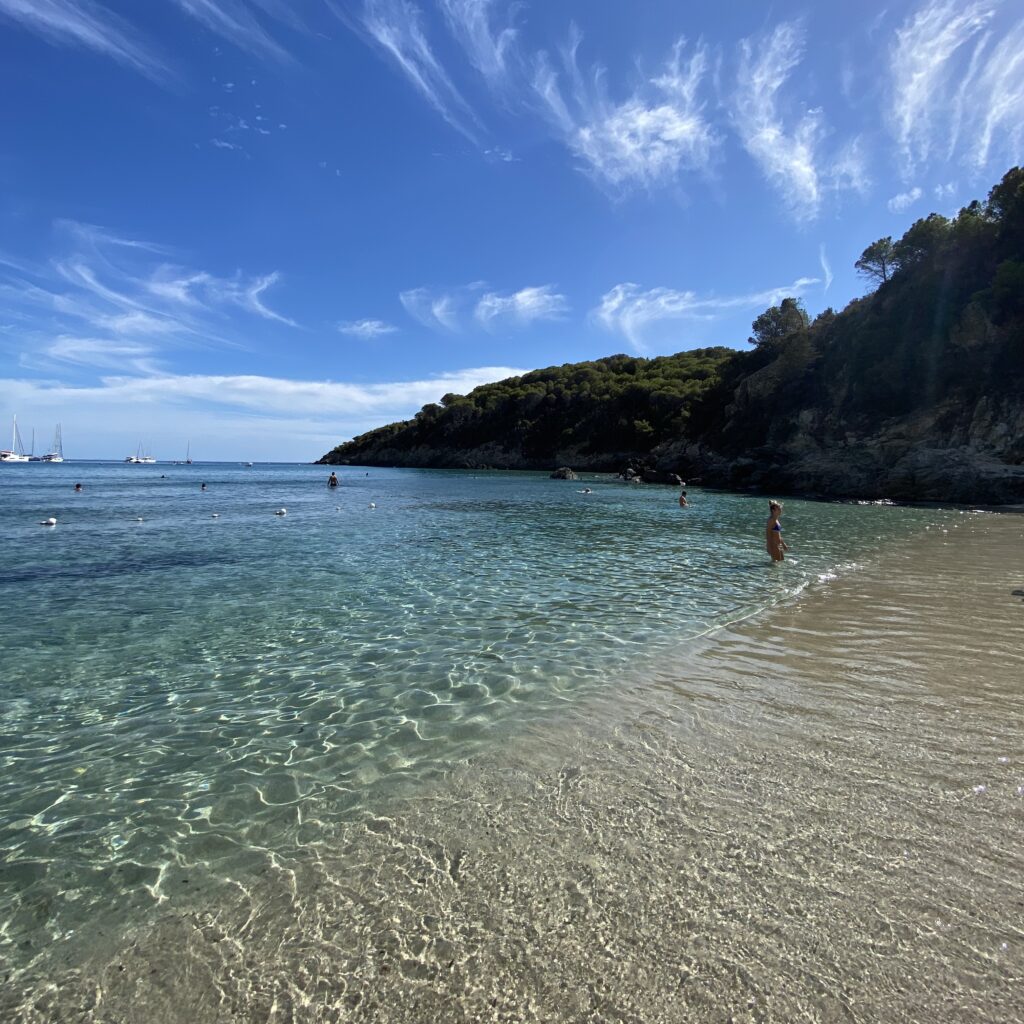
Lover’s Beach, on the island of Elba, is one of the most beautiful and atmospheric beaches in Capoliveri.At the magical meeting point of sea and nature, blue and green, water and land, it also boasts the unique feature of being located in a mineral-rich area.Untamed and wrapped in the allure of its Legend, it offers plenty of opportunities for relaxation and a variety of activities. Where it is locatedFirst, it’s useful to know exactly where it is. Lover’s Beach lies in Capoliveri, in the province of Livorno, between the areas of Pareti and Palazzo.It sits at the southernmost tip of Elba, on its eastern coast. This is the last equipped beach on the southern side of Monte Calamita, so named for the presence of magnetite alongside many other minerals. For this very reason, Lover’s Beach was once called Cala de lo Ferro: it lies near the old iron mining area, where metal was extracted from the minerals found in the mountain and surrounding region. Now protected by UNESCO, it is one of the most evocative, wild and least urbanised parts of Elba Island. To the left of Lover’s Beach is the small beach of Punta delle Ciarpe, right opposite the Gemini islands.From here, you can still see traces of mining activity hidden within the Mediterranean scrub. To the right of Lover’s Beach is another small cove, nestled among the rocks of Punta di Pareti. From the beach, you can spot the island of Montecristo, the promontories of Capo di Stella and Fonza, as well as Capo Poro. FeaturesIt’s useful to take a closer look at its features. Lover’s Beach is about 280 metres long and nearly 30 metres wide.Given its small size, it’s best to avoid July and August to steer clear of the typical high-season crowds. The beach enjoys an ideal location: it’s sheltered from currents and protected from most winds, with the Gemini Islands to the south and Punta Pareti to the north. The beach mainly consists of sandy areas, mixed with small pebbles that reach the crystal-clear sea.Its clear waters, the abundance of fish, and the nearby Gemini Islands, whose seabed is rich in marine life, make it an ideal spot for lovers of Snorkeling. Set into the cliff on its sides (excellent for those wishing to fish from the shore), the beach is half free access and half equipped with bathing establishments.Despite its modest size, it offers a variety of services and experiences such as: Bars and restaurants. Kayaks, canoes, pedal boats and sailing boat hire. Umbrella and deckchair hire. Sailing and windsurfing courses. Access for people with disabilities. A small free car park and a large paid car park. Alongside snorkeling, diving and excursions via boat hire, the location is ideal for enjoying a stunning sunset, with the sun setting behind Monte Capanne. Among the features of Lover’s Beach, one must mention the Legend that gave the place its name. Dating back to 1534, it tells the story of two lovers: Lorenzo and Maria. The woman, whose name the beach bears, tried to save the young man from being kidnapped by the pirate Barbarossa, who dragged the fiancé aboard his sailing ship.In a desperate rescue attempt, the young lover threw herself into the sea and disappeared beneath the waves. Nothing more was ever heard of her and her body was never found.Only her shawl resurfaced, found on a rocky outcrop that has since been called “Ciarpa”. On 14 July, Lover’s Beach hosts a re-enactment of this event, which is very popular across the whole island of Elba.With spectacular torchlight processions, 16th-century costumes and rowing contests, the beach takes on a unique atmosphere. How to get thereFinally, it is helpful to know how to reach the beach. Lover’s Beach is easy to reach: By car: after passing the roundabout in the centre of Capoliveri, continue for about 5 km following the signs to the beach.The average driving time is 10 minutes. By bus: there is a shuttle service departing from Capoliveri. By bike: to reach the beach from Capoliveri, you need to travel 4.9 km, with an average journey time of 19 minutes. For those who prefer to arrive on foot, the shortest route (also starting from Capoliveri) passes through the locality of Pareti.It is 4.7 km and generally takes about 1 hour to walk. Therefore, compared to other beaches and coves on the island, which are often difficult to reach or only accessible by sea, reaching Lover’s Beach is relatively easy.
How to Reach the Blue Grotto
Knowing how to reach the Blue Grotto is essential to fully appreciate its beauty.It is one of the main attractions on the Island of Elba, renowned for its uniquely shaped rocks, vibrant underwater life, crystal-clear waters, and the island’s most stunning surrounding beaches. Where the grotto is locatedFirst, it is helpful to understand the location of the grotto. Located within the municipality of Campo nell’Elba (Livorno), specifically along the coastal road, the Blue Grotto sits on the western coast of the Island of Elba. It lies at the base of a sheer cliff facing the sea, at the start of the Costa del Sole, which overlooks the south-western part of the island.This coastal stretch, approximately 10 km long, extends between the municipalities of Marciana and Campo nell’Elba. The latter is the location of the Blue Grotto, nestled between the Cavoli and Colle Palombaia beaches. These coastal spots are renowned for the crystal-clear sea that surrounds them, so pure that the Blue Grotto is more famously known as the Sea Cave.This owes to the remarkable clarity of the sea within the cave, which takes on a very bright and intense blue hue.Thanks to the sunlight that penetrates the water, the sea creates distinctive reflections that constantly change both on the cave’s inner walls and its seabed. Beyond the spectacular light effects on the surface, it is the seabed itself that holds the real marvel.The rocks rising beneath the water form truly unique shapes, while the underwater life fills the entire cave with rich biodiversity. This is why the Blue Grotto is one of the main attractions for snorkelling enthusiasts: a chance to discover the enchanting beauty of Elba. Can I reach it on foot?One of the most common questions is: can it be reached on foot?Unfortunately, the answer is no. The Blue Grotto is surrounded by a very high and steep coastline that plunges sharply into the sea.For this reason, reaching it by land is practically impossible. The only option for visitors is to travel by sea, which is actually an even more evocative experience. The only land-accessible route to approach the beach of Cavoli starts from Portoferraio, the main tourist port of the Island of Elba.From there, the journey continues: By taking the provincial road 24 to Procchio, a seaside resort within the municipality of Marciana (Livorno).Its beach, approximately 1 km long, is one of the largest and best equipped on the island. Therefore, since you are passing through, a stop here is certainly recommended. From Procchio, you should then follow provincial road 25 southwards, following signs for Cavoli.Its beach is one of the most popular and well-loved on the Island of Elba, making it an ideal place for a break as well. Overall, this land-accessible route takes about half an hour by car.On foot, it would take approximately 4 hours and 20 minutes.However, it is important to keep in mind that these are provincial roads. How to get thereIt is now useful to explain exactly how to reach the Blue Grotto. As stated, the only way to reach the Blue Grotto itself is by sea.The options available are: Rent a small boat. Hire a pedal boat on the nearby beaches: Cavoli and Colle Palombaia. Join a boat excursion. This final option is often the most comprehensive.In fact, these excursions typically include additional stages beyond the Blue Grotto, such as the Ogliera Rock near Pomonte, renowned for its shipwreck, as well as other charming beaches and dolphin-watching spots. Moreover, accompanied by an expert guide, you can discover many fascinating curiosities about the area. Boat excursions to the Blue Grotto are particularly popular during the high season, Departing daily from Marina di Campo Harbour, the sole landing point on the southern coast of the island.The excursion programme always includes a swimming stop within the cave, making it an ideal spot for snorkelling enthusiasts. If you decide to visit independently by hiring a pedal boat or a small craft, it is advisable to keep a close eye on the sea conditions.The waters inside the Blue Grotto are usually calm, but without experienced guidance, it’s important to assess conditions carefully and proceed with caution. The recommended time for visits is typically in the afternoon, when the light enhances the cave’s spectacular colours.
Dolphins Elba Island
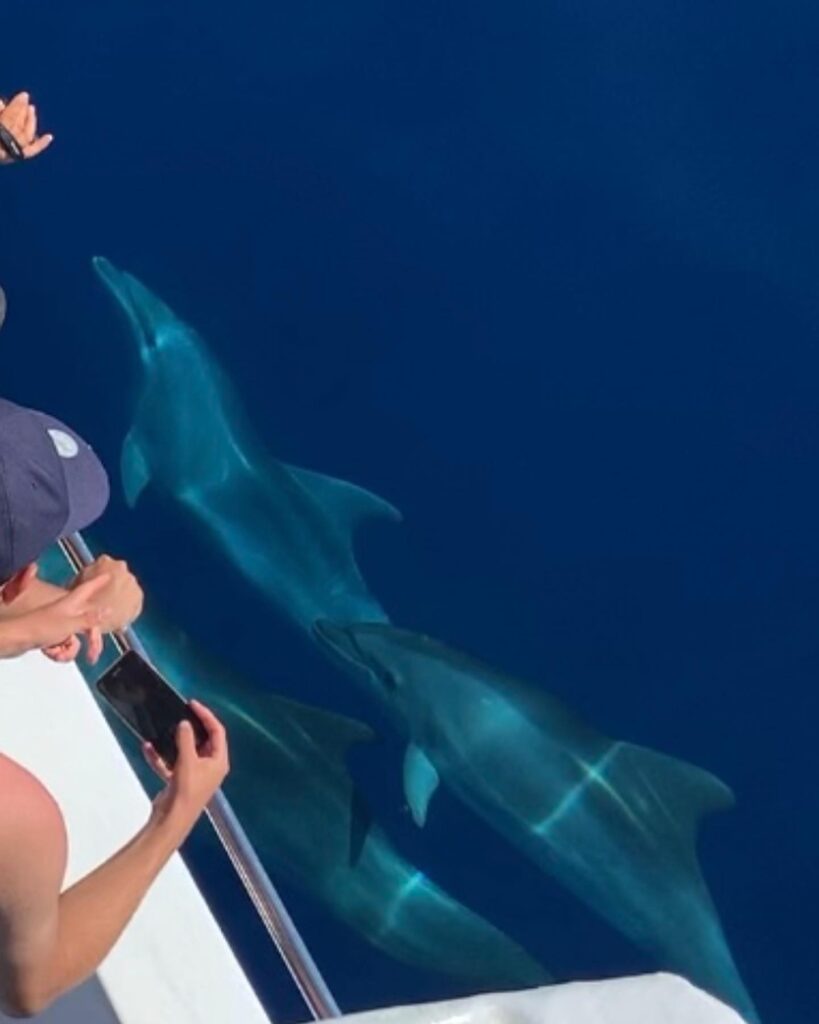
If you are on Elba Island, you simply must not miss the chance to see dolphins swimming in its crystal-clear waters.Whale Watching is one of the most popular activities on the Island, attracting many curious visitors from around the world.It offers an unforgettable experience, perfect for appreciating the Elban sea in all its natural splendour. How to see themIt’s helpful to have some guidance on the best way to spot dolphins, as there are important considerations to keep in mind. The dolphins that inhabit the waters around Elba Island—an ideal habitat for many years—are very numerous.Sightings are therefore quite common, though never guaranteed.With a few useful tips, however, you can greatly increase your chances of not missing this wonderful opportunity: The season.Although it is possible to see them even in summer, The best time to see cetaceans is during the off-season months: spring, autumn, and winter. The reason is straightforward: between May and August, Elba Island, with its crystal-clear waters and many attractions, draws numerous tourists and becomes more crowded.Although cetaceans appreciate the warmer water in summer, they tend to avoid the increased pollution and excessive activity, which they perceive as possible threats. As a result, dolphins are more likely to come closer to Elba’s shores when the sea is calmer, boosting the chances of sightings.However, many animals have grown accustomed to human presence, making encounters possible even during the summer months. The vessels. For a reason similar to the one mentioned earlier, the most recommended vessels for spotting dolphins are sailing boats. This does not entirely exclude motorboats, which tend to produce more noise and can disturb the animals.As we have seen, cetaceans feel more at ease in a peaceful environment, which in turn makes it easier to observe them. That said, many dolphins in the waters around Elba have become accustomed to the sound of engines over time.So often, this is no longer an issue. These are therefore the key factors to bear in mind if you wish to see dolphins swimming around Elba.Once you have spotted them, it is also important to observe a few other guidelines: Maintain a minimum distance that ensures cetaceans do not feel threatened and can continue swimming safely. Avoid approaching head-on; instead, move alongside the dolphins, drawing closer gradually without causing them distress. It is important to maintain a steady speed, particularly with motorboats, as sudden acceleration produces more noise. Approach as quietly and calmly as possible, avoiding any sounds or movements that might startle these animals. Where to see themElba Island offers many excellent locations to observe dolphins.Indeed, the waters around Elba lie at the heart of the International Whale Sanctuary: a protected marine area covering approximately 87,500 km², spanning Italy, France, and the Principality of Monaco. Owing to the rich abundance of plankton and pelagic life, the area of the International Marine Mammal Sanctuary offers an ideal habitat for the reproduction and feeding requirements of Mediterranean cetaceans: Common Fin Whales, Sperm Whales, Striped Dolphins, Pilot Whales, Risso’s Dolphins, Bottlenose Dolphins, Beaked Whales and Common Dolphins.The Mediterranean Manta Ray, Sea Turtles and the Mediterranean Monk Seal can also be found here. Among the prime locations for dolphin watching, the islands surrounding the seas of Elba are particularly noteworthy: Capraia Island.This volcanic island, unique for having been formed by a double eruption, is considered one of the wildest in the archipelago.It may be precisely this wildness that makes it an excellent spot for cetacean sightings.The island is usually accessed from Portoferraio or Marciana Marina, with crossings of approximately two hours and one and a half hours respectively. Pianosa Island.This is the island closest to Elba Island, located to the south.Its territory is strictly protected, with certain access restrictions; this ensures an unspoilt environment, thereby enhancing the likelihood of spotting dolphins.To reach Pianosa Island, trips usually depart from Marina di Campo, Rio Marina or Porto Azzurro, taking on average less than an hour (about 45 minutes). Montecristo Island.Part of the municipality of Portoferraio, this island is among the most significant for its natural heritage.To safeguard biodiversity, access is heavily restricted: only 2,000 visitors are allowed each year, and the island is closed in April and May.These protections have preserved Montecristo Island’s wild and pristine character, making its surrounding waters ideal for dolphin watching. In addition to the islands, there are several locations on Elba Island where cetaceans are frequently sighted.Among these are: Costa dei Gabbiani.This is a wild stretch along the Eastern Coast of Elba Island, characterised by towering cliffs, numerous beaches and coves, and notably the presence of the yellow-legged gull.Most of this area is accessible only by sea and, thanks to the protected zones in place, groups of dolphins can often be seen swimming undisturbed in the surrounding waters. Sant’Andrea.Located on the north-western side of Elba, this charming seaside spot is a strategic location for cetacean watching.From this coast, where Capraia Island and Corsica are visible, you can gaze out over crystal-clear waters that have been home to many dolphins for several years. Research conducted by the Cetacean Research Centre, which has devoted decades to studying the marine environment around Elba Island, has mapped the distribution of dolphins in this area. The findings clearly indicate that the marine triangle to the north-west of Elba Island, bordered by Punta Polveraia, Capraia Island, and Capo d’Enfola, is home to a notably resident group of dolphins.These cetaceans are permanently found along the north-western coast, making it the preferred location for dolphin watching. Dolphin excursions on Elba
What to See on Elba Island in 2 Days
Knowing what to see on Elba Island in 2 days is essential to fully experience the beauty of the area.That’s why it’s helpful to be aware of the best options, so you can choose what suits you best and not miss the most important Elban treasures. The best beachesIf you find yourself on Elba Island, even for a short visit, you should be familiar with its finest beaches.There are many and varied: sandy or pebbly, small or large, more or less busy.Each one, in its own way, reveals a unique corner of the Elban Sea’s beauty. Here are the top beaches to consider when seeking a bit of relaxation: Capo Bianco Beach (Portoferraio).On the northern side, you’ll find this stretch of around 300 metres of white pebbles, nestled in a white promontory. The tall cliffs provide a stunning backdrop to fine shingle and rocky seabeds, where the crystal-clear waters create beautiful reflections. As one of the most famous and popular beaches, it is often busy. How to get there: from Portoferraio’s historic centre, turn onto Viale Einaudi and follow the road to Ghiaie beach. After about 1 km, you’ll see signs for Capo Bianco beach. These lead to a large car park, from where you can reach the beach via a flight of steps. Facilities: paid parking, parasols and deckchairs, bar, pedal boat hire. Sansone Beach (Portoferraio). Located on the northern side of Elba Island, this stretch of coast is known for its small white gravel pebbles, alongside a stunning mix of rocks, caves, and hidden inlets. The crystal-clear waters reveal the pale seabed beneath, especially on days when the Scirocco wind blows. It’s an ideal spot for anyone seeking a quieter, more secluded beach experience. How to get there: from the Portoferraio-Enfola provincial road, after about 4.5 km you’ll find a small path on the right that leads down to the beach. Please note: this is a footpath only and can only be accessed on foot. It’s best to leave your vehicle in the nearby roadside lay-bys. Facilities: parasols and deckchairs, bar, pedal boat hire. Enfola Beach (Portoferraio). Situated on the northern coast, this beach features a narrow isthmus that connects Monte Enfola to the rest of the island, creating two separate beaches. The south-facing beach is the friendlier and more popular one, with grey pebbles and shallow waters. From here, you can enjoy a stunning view of the Elba coastline, while the headland is scattered with bunkers, depots and platforms dating back to the Second World War. A perfect spot for those seeking a smaller, more sheltered beach. How to get there: From Portoferraio, simply follow the signs for Enfola-Viticcio for around 6 km. Facilities: free parking, parasols and deckchairs, bar, restaurants, pedal boat hire and canoes. Fetovaia Beach (Marina di Campo). Situated on the west coast, in the south-western part of the island. Fetovaia Beach is a true gem: fine golden sand meets the lush green Mediterranean scrub that stretches for around 800 metres. The seabed gently slopes into clear waters that shift in colour from turquoise to emerald green. Thanks to its unique beauty, the beach is often quite busy. How to get there: It’s about 10 km from Marina di Campo. After turning off the main provincial road, it’s just a 1 km drive to reach the beach. Facilities: free parking with limited spaces as well as paid parking, parasols and deckchairs, bars, restaurants, pedal boat and canoe hire, a newsstand, and disabled access. Cavoli Beach (Marina di Campo). Its distinctive microclimate, due to its position, allows for swimming even out of season (it tends to be busy from March through to November). The beach, with its granular sand, lies within an inlet enclosed by cliffs and the lush greenery of the Mediterranean scrub. Especially in summer, it’s the perfect spot for young people seeking fun: beach parties and live music are regular features. How to get there: from Marina di Campo, simply follow the signs for around 5 km. Services: paid parking, parasols and deckchairs, bars, restaurants, pedal boat and canoe hire, and a newsstand. Laconella Beach (Capoliveri). Known for its fine, pale sand and crystal-clear waters, Laconella offers a charming spot just beyond a small rocky outcrop, where you’ll find Lacona’s largest beach. The calm, shallow sea stretches out along a generous shoreline, making it perfect for families with children. It’s also a great choice for those looking for a quieter, less crowded place to relax. How to get there: from the provincial road, head towards the Laconella campsite. After passing through the entrance, a short footpath leads down to the beach. Facilities: there are no facilities on site. It’s best to park in Lacona and walk from there. For those wanting to enhance their experience, the beaches of Capo Bianco, Sansone and Enfola are perfect spots for snorkelling on Elba Island. The Caves One of the must-see sights on Elba Island during your two-day visit is its impressive caves – another natural treasure of the island. In particular, make sure you don’t miss: The Blue Grotto. Located on the western coast, it’s nestled between the beaches of Cavoli and Colle Palombaia. This sea cave, also known as the Blue Grotto, is named for the incredible clarity of the water inside. Depending on the sun’s position, you can enjoy stunning reflections on both the seabed and the cave walls. These magical light effects have made it famous as one of the most beautiful grottos. Its size means small boats can enter, and since it’s only reachable by sea, a boat trip is definitely recommended! The Madonnina Grotto. It is located on the slopes of Mount Giove, near Marciana Marina. This natural cave takes its name from a small statue of the Madonna placed inside in the 1960s. On the path leading to the grotto, there is a granodiorite rock with a slight circular hollow: legend has it that the Virgin Mary rested there. The Monk Seal Grotto. This cave is located near Innamorata Beach, in Capoliveri, along the Costa dei Gabbiani. Its name comes from the fact that,
Snorkelling Isola D’Elba
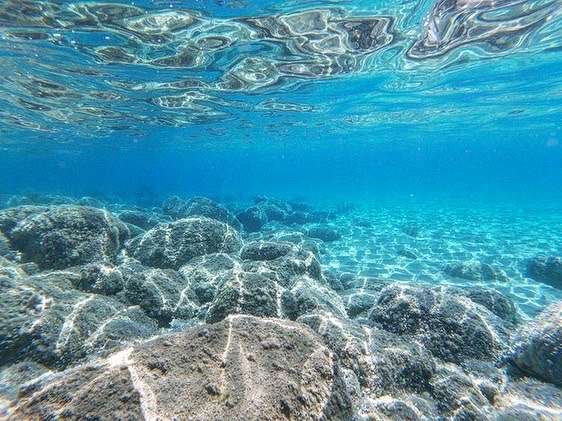
Snorkelling around Isola D’Elba is more than just an activity — it’s a true adventure! Dive into magical underwater landscapes, immerse yourself in crystal-clear blue waters alive with vibrant marine life. This handy guide will show you the best snorkelling and diving spots, as well as perfect little coves for a relaxing break. Where to snorkel on the island It’s hard to go wrong, but to fully appreciate the splendour of snorkelling here, it helps to know the best places to explore. You’re spoiled for choice: every location offers a unique experience, from abandoned shipwrecks to some of the most fascinating sea creatures. So here’s a handy guide to help you find your way!Make sure you don’t miss these top spots for snorkelling on the island of Elba: Capo Sant’Andrea.Located in the north-west corner of the island, this is the most remote and wild area, beloved by many for its rich natural beauty. Here you’ll discover posidonia in all its glory: a vivid green seagrass that creates the perfect home for a variety of fish.You can swim alongside salps, needlefish, sea bream and the brightly coloured castagnole. The sandy seabed is also a treasure trove, offering the chance to spot noble pen shells and starfish—creatures that are becoming rarer yet remain endlessly fascinating. Marciana Marina. Along this stretch of coast, you’ll find plenty of coves perfect for snorkelling. The area is famed for the natural pools of Sant’Andrea, where the sunken rocks of the Formiche di Zanca conceal some incredible wonders: among sponges and corals, you’ll spot wrasses, seabream and octopuses swimming about. Make sure you don’t miss the Ogliera rocks, home to a rich array of underwater life – from amberjacks and rockfish to lobsters! Just a 5 to 10-minute stroll will lead you to another gem for snorkelling on Elba: the offshore waters of Pomonte. Glide through the clear blue and you’ll come across a sunken shipwreck! It’s a merchant vessel from 1972, a 499-ton cargo ship that was heading to Marseille before it went down. Punta Cannelle. Making your way south on the Island of Elba, you’ll discover waters just as abundant with marine life. The rocky walls that dive deep into the blue are draped in white and yellow sea fans, which, further down, give way to fans of paramurices. Red castagnoles and lobsters lurk in the crevices of the rock face. As you descend deeper, you’ll encounter red sea fans, sponges, groupers, salema and sea breams. And, to top it off, resting on the sandy seabed is an extraordinary relic: a mine from the Second World War! Spiaggia delle Ghiaie. Just a stone’s throw from the historic centre of Portoferraio and set within a protected marine reserve, this white pebble beach is perfect for both adults and children. The crystal-clear waters make it a snorkelling haven: only a few metres from the shore, you’ll find yourself surrounded by a dazzling array of fish! Since 2016, a powerful lighting system has been in place, allowing you to enjoy the sea even after dark and in complete safety. Keep your mask and snorkel close at hand – just nearby, there are other remarkable beaches waiting to be explored. Treat yourself to some snorkelling and adventure at the shoals of Capobianco, Padulella beach, and Cala dei Frati! The best coves Looking for a bit of relaxation? The best coves on the Island of Elba are the perfect choice! Rocky walls all around, shallow sandy seabeds and crystal-clear waters create a stunning natural setting ideal for your downtime. Here are the coves you simply can’t miss: Le Buche Cove.This small, pristine, and enchanting beach is ideal for those who prefer places away from the crowds. Large dark pebbles characterise the cove, which is surrounded by a tall cliff plunging steeply into the crystal-clear water. There are two paths leading here, the shorter one taking about 20 minutes – a wonderful chance to soak in the scenery! And if you can’t resist, this spot is also perfect for snorkelling and diving! Cala del Cotoncello. One of the Island of Elba’s most renowned beaches, it’s understandably busier than the last spot. This natural pool nestles amid granite rocks polished by the sea, all embraced by lush greenery. The rest is pure white sand and sparkling clear water. There’s a charming path leading here: from Sant’Andrea beach, a stroll along the granite rocks reveals breathtaking views of this lovely little cove. A walk definitely worth making! Caletta di Lamaia. Another natural gem, quieter and more untamed than the last—so much so that no buildings are in sight. You can reach it via a path that starts from Biodola beach. The seabed here is made up of fine, golden sand, with stretches blanketed by posidonia, whose rich green perfectly complements the surrounding vegetation. And take note: this is also a superb spot for snorkelling! Cala dei Frati. Close to Ghiaie beach lies another incredibly atmospheric spot. White shingle pebbles meet waters shifting from bright turquoise to deep blue, revealing a true natural paradise. But beware, this beauty isn’t the easiest to reach: you can’t get here on foot, so you’ll need to swim from the nearby beach or hire a pedalo. A touch of adventure! Caletta di Capobianco. This beach takes its name from the smooth, round white pebbles that line its shore, set against crystal-clear waters and mesmerising underwater terrain. Below the surface, you’ll discover marine shoals and vibrant fish swimming peacefully even close to snorkellers. Wild cliffs cradle this hidden gem, definitely worth exploring. Be sure to visit the nearby Spiaggia di Sansone—you won’t be disappointed! Diving The waters surrounding Isola d’Elba also offer fantastic opportunities for those eager to dive deeper: beneath the surface lie real treasures waiting to be found. Here are some underwater spots you won’t soon forget: Statue of Christ. Starting off at Scoglietto di Portoferraio, you descend the rocky wall plunging down to 50 metres, where you’ll spot red gorgonians and lobsters peeping out. You may come face to face with <strong;eagle rays, barracudas, sea bream and dentex gliding gracefully all around you. Continue descending the wall
The 5 Most Beautiful Beaches of Elba Island
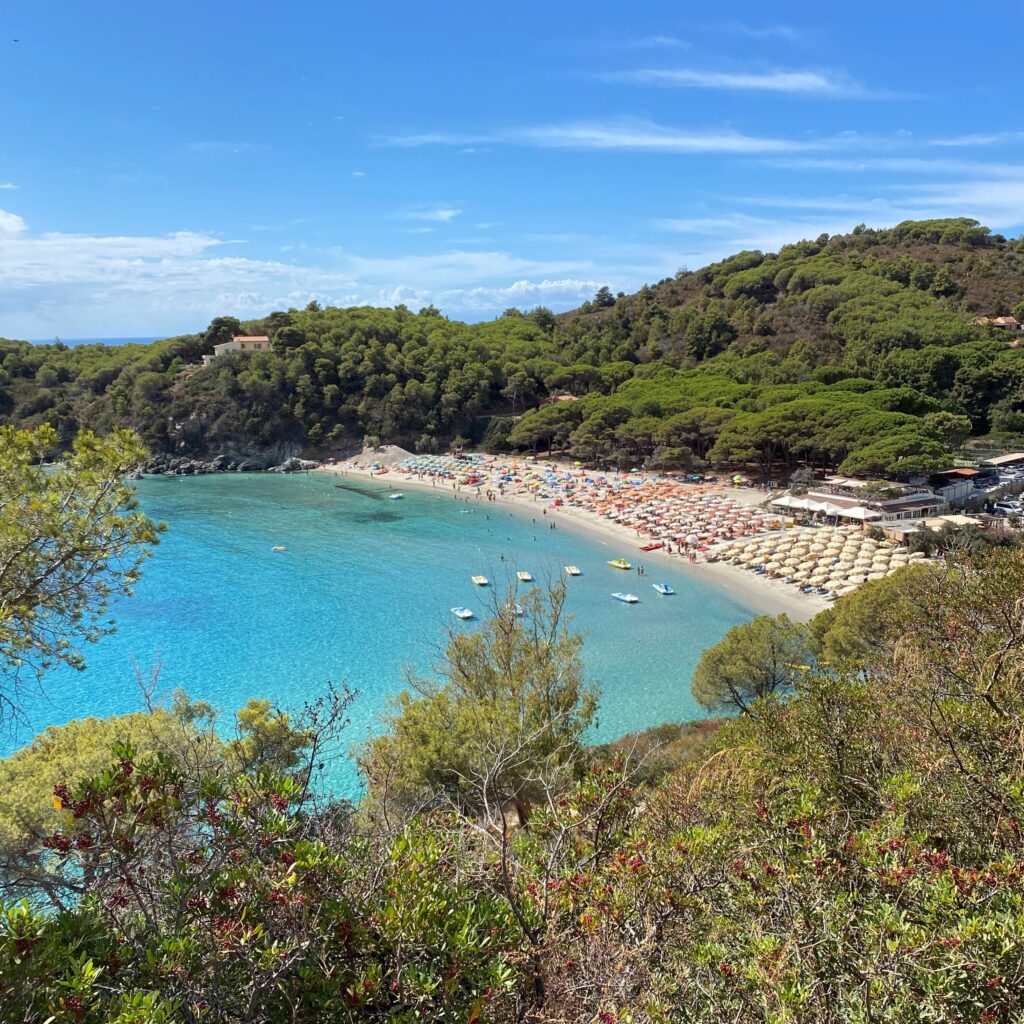
When you close your eyes and begin to picture Elba Island, the stunning beaches that define it are sure to come to mind. Renowned for their crystal-clear waters and breathtaking panoramas, Elba proudly boasts more than one hundred beaches—an astonishing number for such a relatively small island. But how do you choose the very best beaches? And what is the best way to reach them? We are here to help with a concise guide to the five most beautiful beaches on Elba Island, all easily accessible by the Baby Princess motorboat. Fonza Beach Nestled in the south-eastern corner of the island, Fonza Beach boasts a crystal-clear sea with sparkling blue waters and a fine sandy seabed. It can be reached on foot along a charming dirt track, by car right up to the shore, or very conveniently by boat. This beach is certainly one of the favourites among locals, thanks to Elba’s authentic colours and the unspoilt nature that perfectly blends with the stunning scenery. Fonza Beach is accessible as part of our South-East Excursion to the Capoliveri Mines. Cavoli Beach Cavoli Beach is truly beyond introduction: celebrated by both locals and visitors alike as one of Elba Island’s most stunning shores, it forms part of the beautiful beaches along the Costa del Sole. This beach boasts powdery fine sand, embraced by the lush natural beauty of the Mediterranean countryside. Easily reached by sea or land, Cavoli Beach offers a range of facilities including:a small car park, a charming beachside bar and restaurant, plus a couple of beach clubs where you can enjoy a thoroughly relaxing day. Moreover, there is a generous stretch of free beach where visitors are welcome to set up their own parasol and towel to enjoy a truly rejuvenating day by the sea. The Gulfof Cavoli is also accessible through our delightful South-West excursion to Sant’Andrea. Fetovaia Beach The crowning jewel of Elba Island, Fetovaia Beach is celebrated as one of Italy’s ten most beautiful beaches, according to a ranking published by Corriere della Sera in 2014. Just beyond Cavoli and Seccheto, Fetovaia Beach captivates visitors with its dramatic granite cliffs, powdery sand, and crystal-clear, paradise-like waters, all enveloped by the fragrant Mediterranean scrub. Nearby, visitors can enjoy the convenience of a bar-restaurant, a quaint bazaar, and an open-air car park. Many visitors, wishing to avoid driving, prefer to use the Elban bus service, which stops conveniently just above the beach. Naturally, the Gulf of Fetovaia can also be reached by sea via our South-West Excursion to Sant’Andrea. Sant’Andrea Beach and Cotoncello Cove Sant’Andrea Beach undoubtedly ranks among the most stunning beaches on Elba Island. Fringed by impressive granite boulders and lush, breathtaking vegetation, Sant’Andrea Beach boasts soft, fine sand. Just a little further along, the flat rocky cliffs linked by a charming jetty offer an ideal spot for those wishing to soak up the sun on the rocks. Close to the beach, visitors will find a small car park, a welcoming restaurant-bar, a hotel, and several shops. Certainly, hiring a scooter is a fantastic way to avoid the hassle of searching for parking and to give you more time to relax and enjoy yourself! The Gulf of Sant’Andrea and Cotoncello, a charming spot just a little further along, are easily explored through our Southwest Excursion to Sant’Andrea. Punta Bianca Beach We have arrived at the final, yet by no means least, of Elba Island’s five most beautiful beaches. This is Punta Bianca Beach, situated close to the Capoliveri Mines. The beach is composed of sand and small dark pebbles, which give it the nickname ‘Black Beach’. The striking contrast between the dark shoreline and the crystal-clear waters is what makes this beach so uniquely captivating. Unlike many other beaches on Elba, Punta Bianca remains undeveloped and is accessible only by sea, adding to its untouched charm. This charming little sanctuary on Elba is well worth a visit during your stay, offering a sense of freedom and tranquility like nowhere else. For us, it is accessible through the South-East Excursion to the Capoliveri Mines.
Discovering Elba Island
‘Starting a blog has never felt this easy,’ I kept telling myself this morning as I tossed about in bed. With a brilliant graphic designer friend helping out, a local from Elba backing me up, and plenty of stories to share, it honestly felt like a doddle. But still, every beginning’s a bit of a struggle. Whether it’s kicking off a blog or your very first day at work, the start always comes with its own challenges – big hopes, and a bit of nerves too. That said, starting something new is exactly what makes life exciting and keeps us buzzing, so let’s crack on! Right, first things first: I’m Arianna, 28 years old, and I hail from a tiny town just outside Bergamo. That’s where I was born, where my family and mates live, and where my wonderful dog’s waiting for me. Truth is, in my young life, a few places have really meant a lot to me. First up, Milan – the city I live and work in now, where I spent six long years at uni and had my first taste of living solo. It’s the city that’s got it all and can do anything, full of big experiences and where I really grew up. Then there’s the States, where I did a six-month Erasmus at the Missouri School of Journalism. That’s where I fell even more in love with languages and made some of the best memories ever, with amazing mates I still hold close to my heart. Honestly, at least once a year, me and my two best international pals – one German, one Scottish – make a point to catch up, have a laugh, and celebrate the fact we’ve all come back together. (Whenever I think back to that last time we said our goodbyes at the airport, I still get a bit teary…) And then, there’s her: the Island of Elba. Which is exactly why we’re here. Now you’re probably wondering, what’s a girl from Bergamo, totally crazy about the States and living in Milan, doing writing about the Island of Elba? Is she just another (adopted) Milanese making things all gloomy? (Just having a laugh!) The big surprise is that my love for Elba grew right alongside meeting someone special: Dario. He’s a proper Elban, born and bred in Portoferraio, who later moved to the gorgeous little seaside town of Marina di Campo — a summer favourite with loads of tourists. It was July 2020 when we met, exactly on the 31st. My parents and I, to celebrate the end of lockdown (and we had no idea it’d only be the first of many…), decided to switch up our summer plans from Versilia to the much-loved Elba Island. It’s where my parents had a holiday when my brother was just three, and thirty years on, they found it just as wild and stunning as they remembered. That family holiday, much to everyone’s surprise (mine included), ended up kicking off a proper love story. Love for Elba, sure, but also for the face behind the Motonave Baby Princess: Dario, who—drumroll please!—is now my boyfriend! Yep, Dario runs a boat for excursions and group trips with his dad Antonio, who’s the captain. That’s where my family and I chose to spend that very 31st of July 2020. So, is it a bit clearer now why I’m popping in here? Dario and I started seeing each other after that holiday, and despite all the mess with yellow, red, and orange zones that were going to keep us apart, we stuck it out. And here we are today, sharing this lovely little story. That’s why Elba means so much to me, and why I’m so excited to tell you all about the Baby Princess, that cheeky ‘prison’ boat — I’ll be sharing loads more about her in upcoming posts! This blog idea popped up quite by chance, with a bit of a nudge from my friends, and it’s all about sharing Elba from my own perspective—just like anyone might do for somewhere special to them. I really hope this page becomes a light-hearted, fun, and maybe even a little bit moving spot for you to discover a wonderful island from a fresh point of view. At the same time, I’m going to share bits of my story here, in a space that’s open to everyone, where I can chat about what’s on my mind and invite you to join in too. After all, our lives are like stories – all you have to do is be willing to share them.